2024
Revisiting the Selfie Project (Visualizing Citizenship)
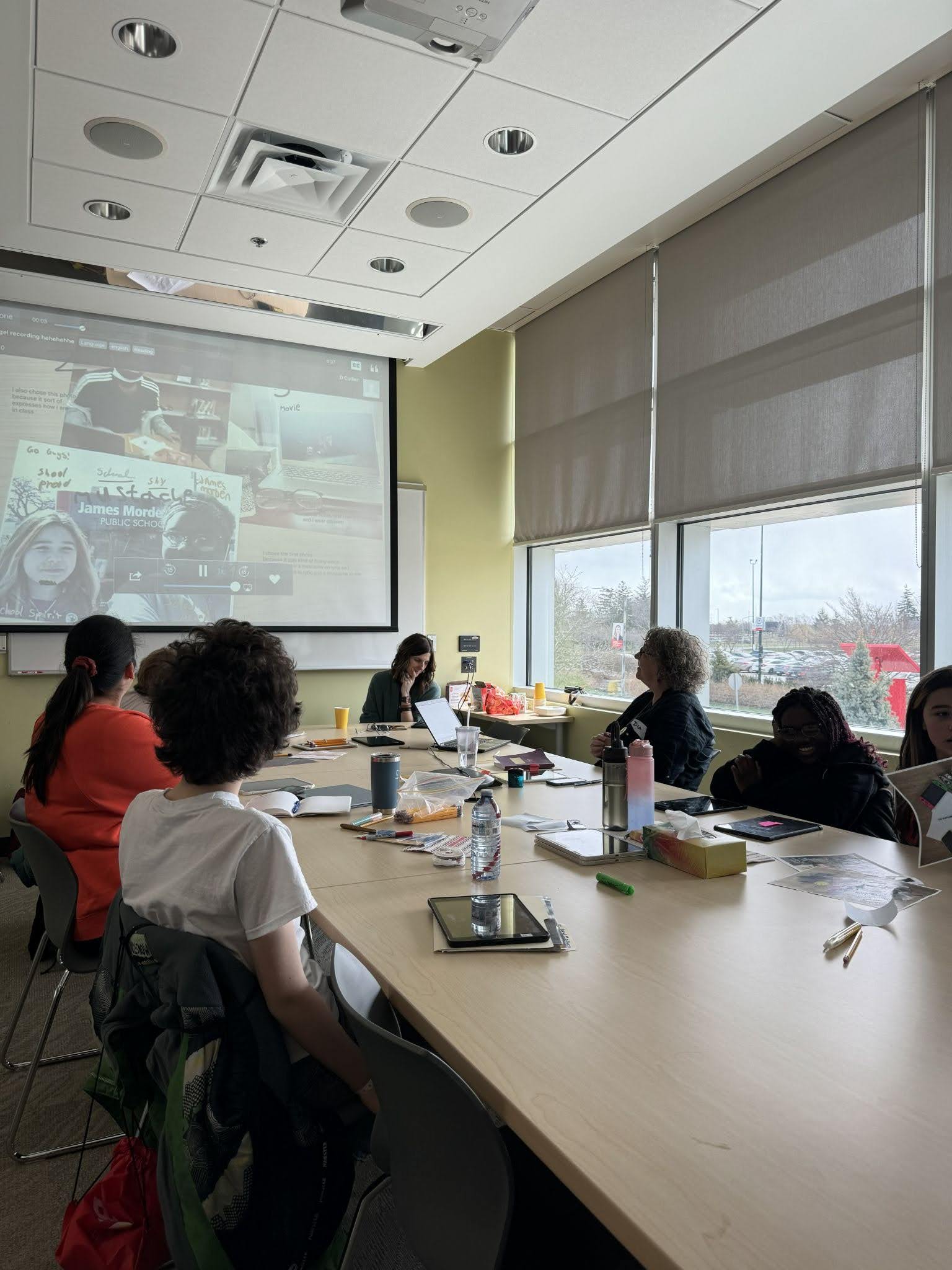
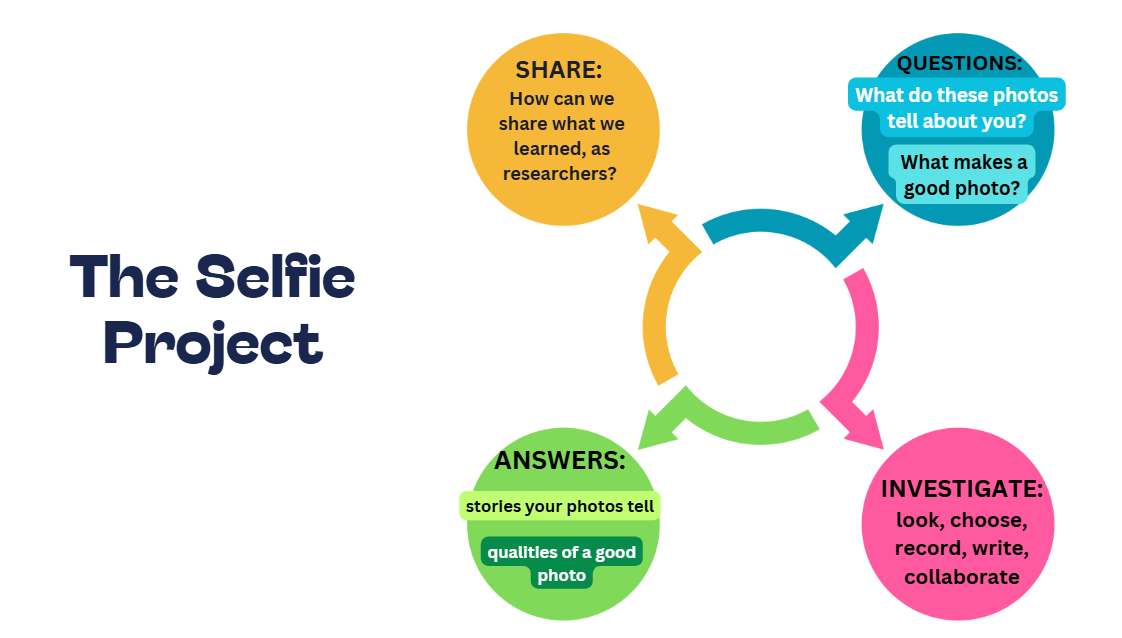
We asked children (aged 9 to 13) to take and modify photos to tell about themselves as learners at school, as family members at home, and as members of their larger community. A year later we revisited that data. Five of the original participants came to our university and worked to analyze the research data and engage in generating new data about photography, social media, and self-presentation. “What does this photo tell about you?” and “What makes a good photo?” were the primary research questions.
Research story
During our revisit project, which we also nicknamed ‘rearview mirror’, we reflected on the project, the role of photos in children’s lives, the qualities of ‘good’ photos, and prepared their analysis to share with wider publics (their school, and unknown audiences).
Here we were particularly interested in ethical research with children and forefronting researcher (adult and child) positionalities and subjectivities in relation to data analysis.
Analysis sessions focused on four accessible research phases: 1) posing questions about something important, 2) generating material/data through actions, 3) thinking and talking about what it means and 4) sharing answers and insights with an audience.
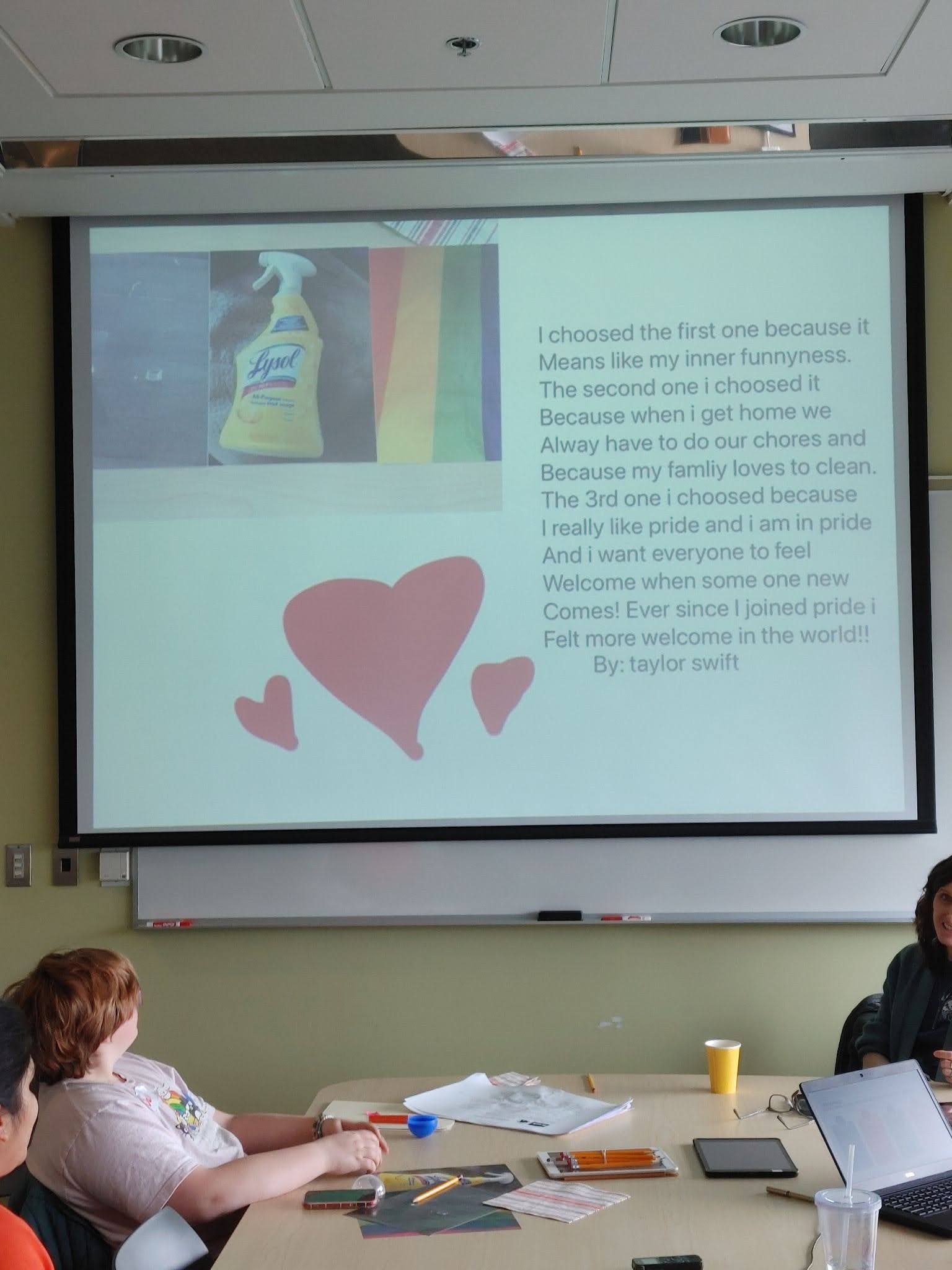
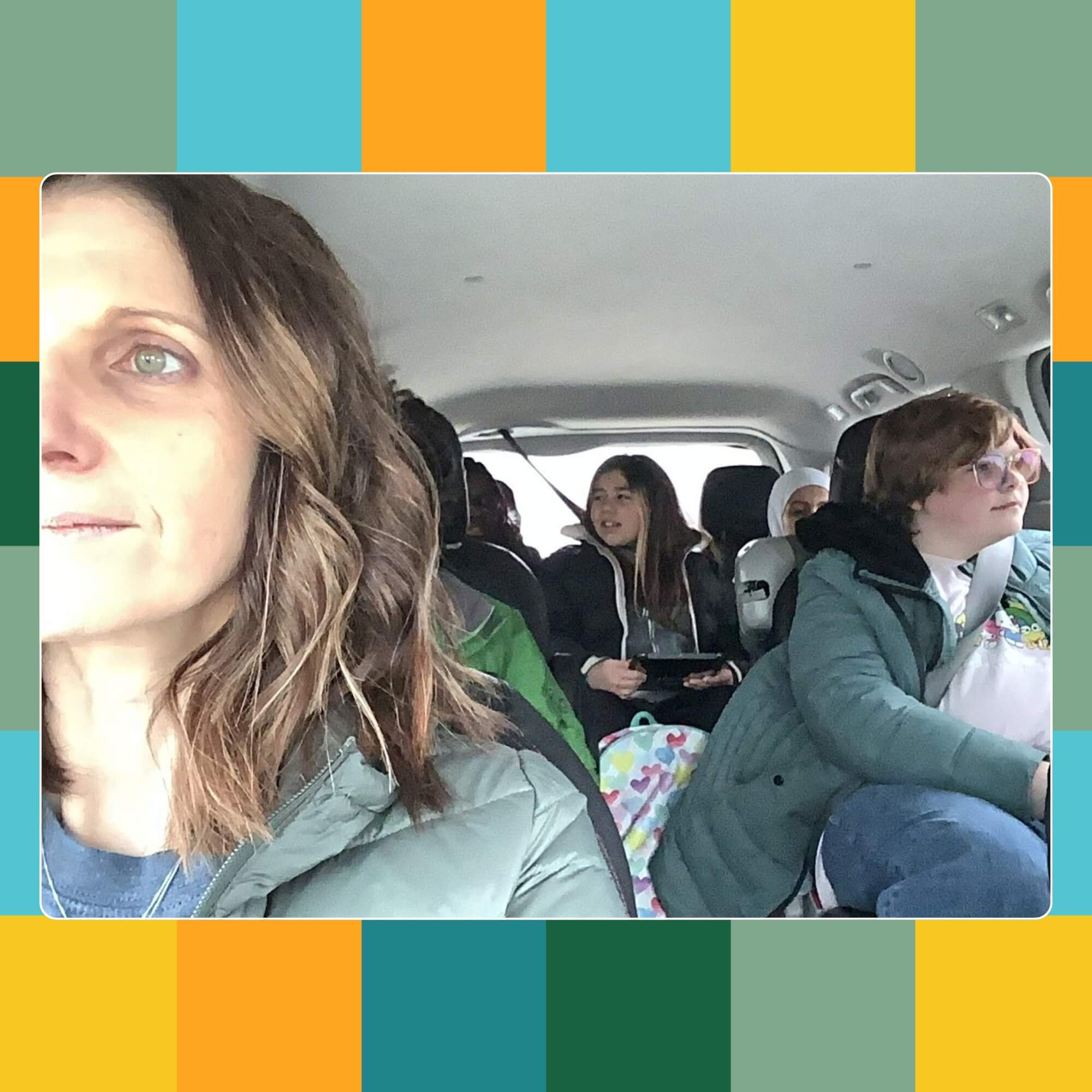
In order to support that process, we offered provocations and data analysis opportunities to arrive at those ends. Children took a series of photos on their journey to the university, shared and liked each others’ photos (in an activity of pass the tablet), recorded their data in charts, rationalized their choices, engaged in selected photos that told their story, and created materials to share.
In this study, the method of analysis is a key finding. We see Gillian Rose’s (2022) model for thinking with and about images and focus on the social rather than technical or compositional elements (although there are other times we have looked at those).
Children as research collaborators
We think that part of being a researcher is deciding what’s important… in a context, in a data set, with a group of people. What is important may vary from person to person. In some projects we have asked children to make objects look important, or we have looked at a data set and asked ourselves to choose five important visual moments in an event. Here, we asked children to be researchers in several ways. We invited them to reflect on past material (what they had generated the year before) and to rank images that best tell about them (top 3). This kind of decision-making or reduction of data helped them to tell stories about themselves and what was important to them, at that moment in time.
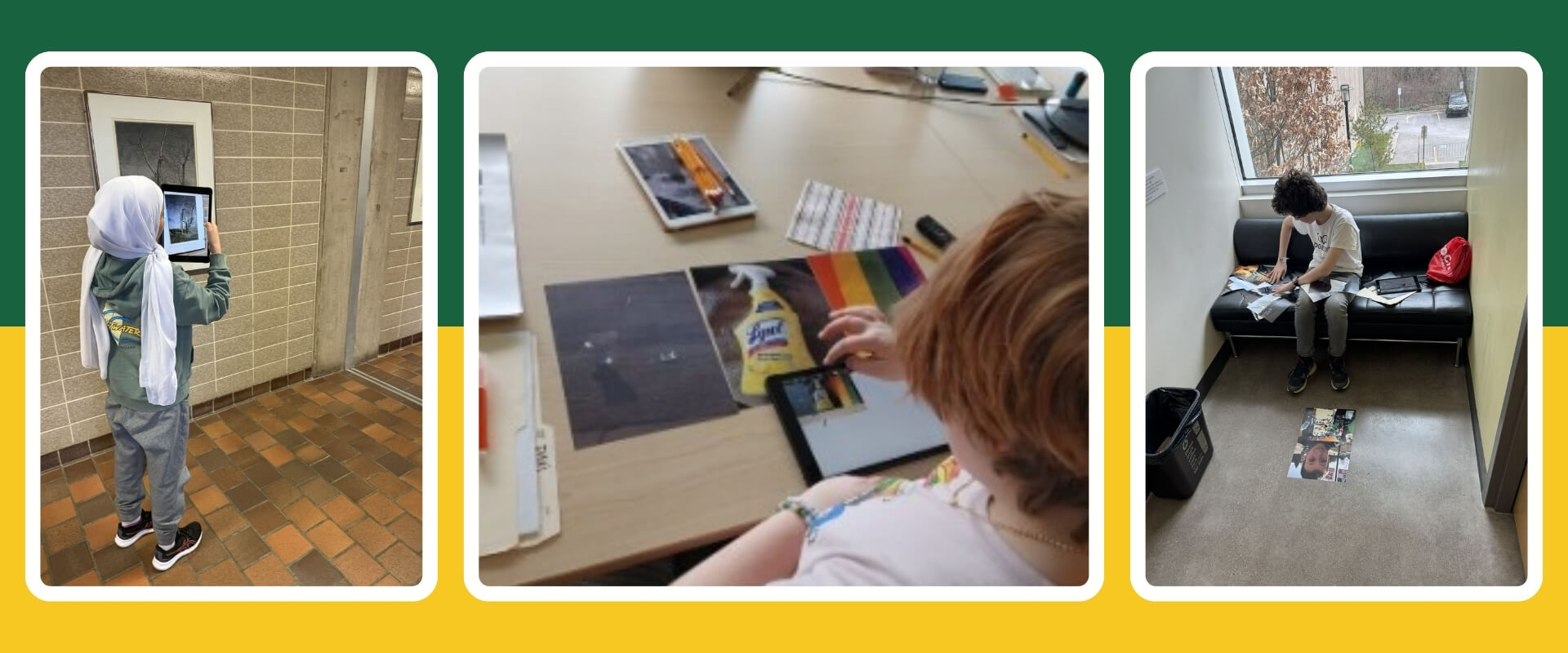
Favoured images
Belonging in a university
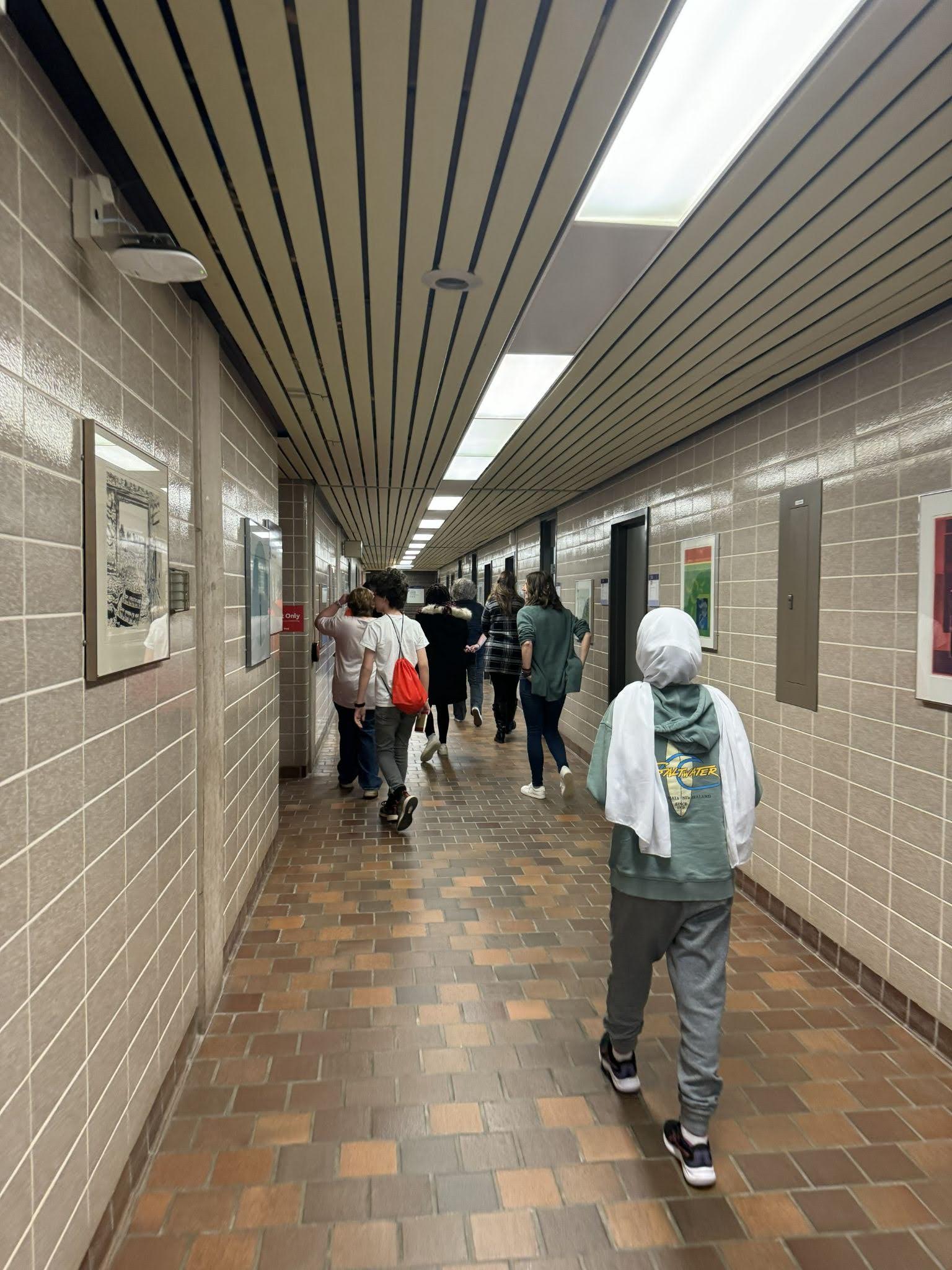
Final analysis